

CollarEV launches ‘Moon’ EV to transform Last-Mile Delivery and Fleet Logistics
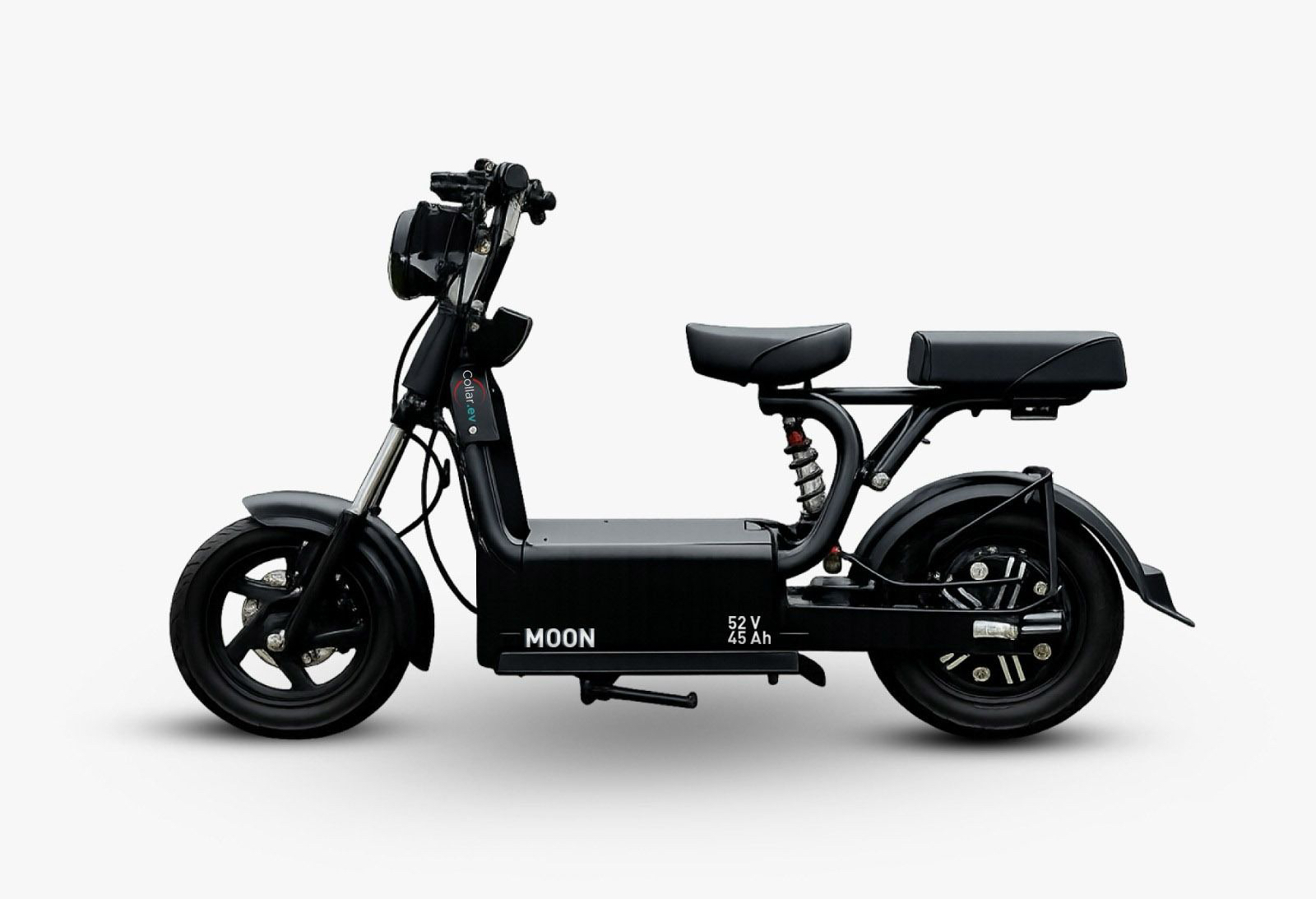
Tapping into the fast-growing demand for electric fleet mobility, CollarEV has unveiled ‘Moon’, a new electric two-wheeler designed specifically for delivery and logistics businesses. Offering a claimed 135 km range, fast charging, and a rugged build, the EV aims to provide a practical and durable solution for India’s evolving last-mile transport landscape.
16/03/2026
No Comments
NEW DELHI
Emerging electric mobility company CollarEV has unveiled ‘Moon’, a purpose-built electric two-wheeler engineered specifically for the B2B delivery and logistics segment. Developed with durability, operational efficiency, and performance at its core, the new e-bike seeks to meet the rising demand for dependable and cost-effective electric mobility solutions for last-mile delivery and commercial use across India.
India’s two-wheeler market surpassed 20 million units in sales in 2025, with electric two-wheelers accounting for approximately 1.4 million units. While much of the electric mobility growth has been driven by consumer-focused products, the B2B delivery ecosystem remains comparatively underserved—an opportunity CollarEV is aiming to address with the introduction of Moon.
Designed for high-utilisation fleet operations, the electric two-wheeler offers an approximate range of 135 km on a single charge. Powering the vehicle is a 51.2 V, 45 Ah Lithium Iron Phosphate (LFP) battery pack with a capacity of 2.3 kWh. The battery supports fast charging, reaching 0–80% in around two hours and achieving a full charge in approximately two and a half hours—an important advantage for delivery fleets that require minimal downtime.
At the heart of the vehicle is a BLDC hub motor producing 1500 W of rated power and 2200 W of peak power, enabling a top speed of 50 km/h. The system delivers 95 Nm of torque at the wheel, providing the strength required for load-bearing commercial duties. To withstand demanding operating conditions, the vehicle is equipped with dual disc brakes, 12-inch wheels, and a payload capacity of up to 150 kg.
Speaking on the launch, Tikendra Yadav from CollarEV said, “Much of the current B2B electric two-wheeler market in India is dominated by low-cost imported vehicles that often face challenges in durability and after-sales reliability. With our new EV for the B2B segment, our goal is to address this gap by developing a purpose-built electric vehicle with a minimalist yet robust structural design that reduces maintenance requirements while ensuring long-term performance. The fully metal chassis and body structure make it particularly suited for demanding commercial and fleet operations. It reflects our commitment to building reliable electric mobility solutions for businesses, and as part of our broader vision, we are also preparing to launch this B2C electric scooter between May and June to serve the growing consumer EV market, which will be first in the segment.”
Beyond its mechanical attributes, Moon incorporates modern fleet-management technology. The electric two-wheeler features a TFT display with integrated telematics that enables asset tracking and fleet monitoring, while also offering keyless start and stop functionality. The platform further supports multiple multi-utility attachment options, allowing businesses to tailor the vehicle for a variety of delivery and logistics applications.
The LFP battery pack is engineered to deliver more than 1000 charging cycles, supporting a longer operational lifespan for commercial fleets. CollarEV also offers a lifetime battery replacement or upgrade option integrated with IoT-based monitoring systems, enabling real-time tracking of battery health and performance. In addition, the company is currently testing supercapacitor-assisted battery technology aimed at further enhancing charging speed, durability, and overall lifecycle performance.
Moon has been developed primarily for last-mile delivery companies, logistics and mobility aggregators, fleet operators, and delivery executives. At the same time, its practicality extends to everyday applications such as milk distribution, vegetable delivery, small retail logistics, rural transportation, and agricultural supply chain movement for farmers—particularly across Tier-3 and Tier-4 regions.
The initial rollout will focus on Tier-1 and Tier-2 cities, alongside rural and semi-urban markets where demand for robust, affordable electric mobility solutions continues to grow steadily.
Latest








-
 BMW M 1000 R: Aerodynamic Design Meets 210 HP
 -
Diesel’s Renewed Relevance
-
Nissan India’s roadmap is all about focusing on new models, network expansion, and scale
-
Mohan Savarkar: The new Tata Sierra is a Premium Mid SUV with a Software-Defined future
-
Motoverse 2025: An amalgam of heritage, music, and the future of motorcycling


Leave a Reply
You must be logged in to post a comment.