

Hari Singh: Rally Champion. Rescuer. Legend.
This was never meant to be an obituary. It was supposed to be a celebration, a cover story on Hari Singh, India’s legendary rally champion. But what remains now is something far more personal – a story of encounters across deserts, of breathtaking skill, and of a man who made the impossible look effortless.
27/03/2026
No Comments
MUMBAI
This was not the story I had intended to write in 2026. The plan had been altogether different, carefully conceived, neatly scheduled, and deeply anticipated. Following my December 2025 cover feature on Rayomand Banajee, the eight-time Formula Car and Karting Champion, for TURN OF SPEED’s 6th Anniversary Special, the editorial roadmap seemed clear. Next in line was Hari Singh – the legendary five-time Indian National Rally Champion – a towering figure in Indian motorsport whose story deserved to be told with equal depth and distinction.
When I reached out to him in early January this year, Singh responded with characteristic warmth. He welcomed the idea wholeheartedly and extended an invitation to his hometown of Chandigarh, assuring us that he would be delighted to sit down and answer every question for the proposed cover story. Needless to say, I was chuffed.
But, as fate would have it, that was not to be.
My first meeting with Hari Singh dates back nearly two decades, to a time when I was working for a newspaper (now defunct). The setting was a small village, Khimsar, that lies between Jodhpur and Nagaur, bordering the Thar desert in Rajasthan, India.
A group of journalists, myself included, had been invited to experience an off-roading event across the region’s sweeping golden dunes. It was here, against the stark and unforgiving desert landscape, that I first witnessed Hari Singh in action. Or rather, I witnessed something far more evocative – Hari Singh gliding.
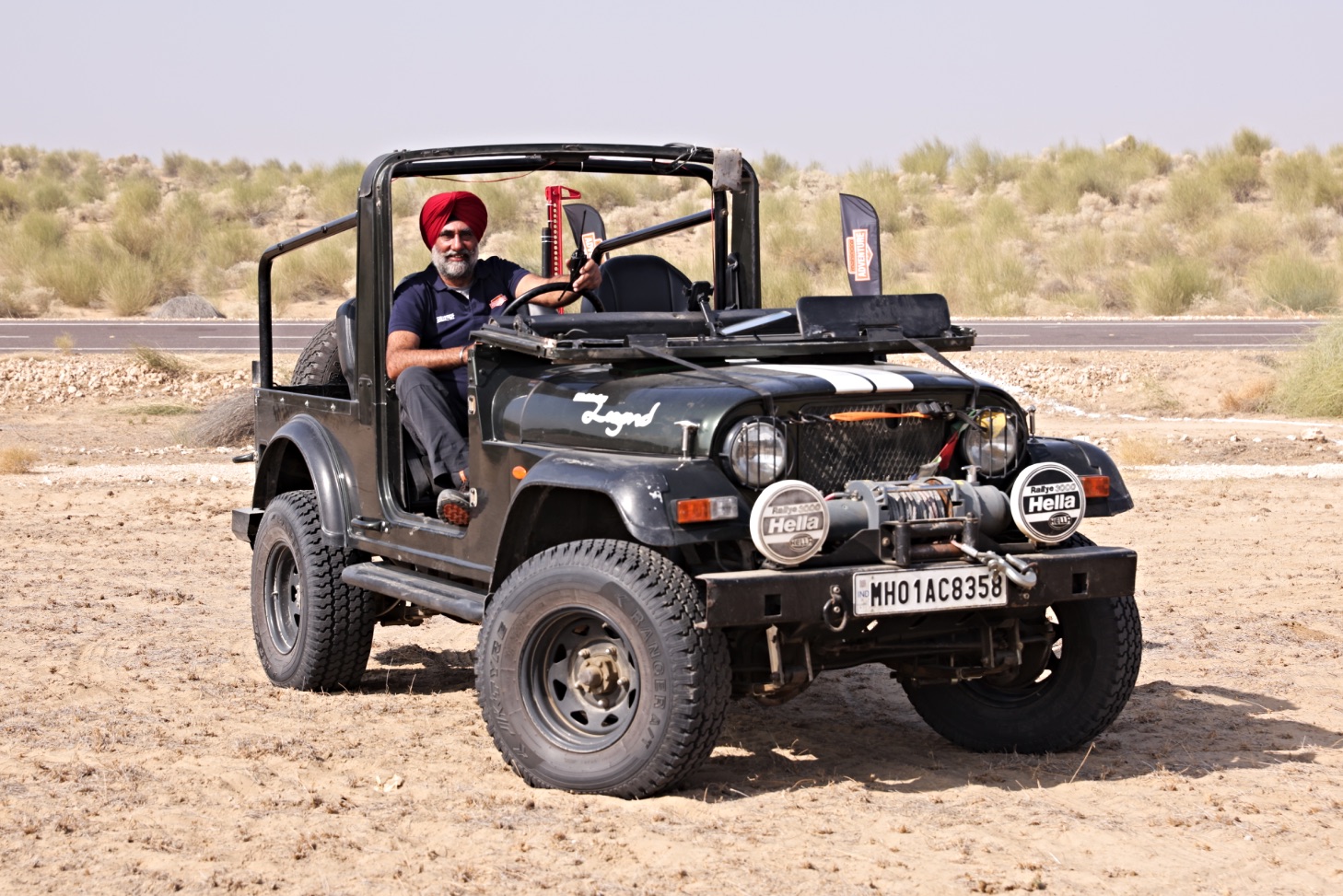
At the helm of a heavily modified “rescue vehicle,” purpose-built for desert recovery and carrying both equipment and teammates, Singh manoeuvred across the dunes with an ease that bordered on the surreal. The vehicle itself was no lightweight machine, and yet, under his command, it moved with grace of a ballet dancer.
It was early morning. The desert air was crisp, the light soft yet unrelenting. And there he was, calm, composed, and utterly unflustered, guiding that formidable machine across shifting sands as though it were second nature. It was a moment that would sear itself into my memory.
Shortly before we embarked on our off-roading drive, I was introduced to Singh alongside the other journalists. It was then that someone in the group casually referenced his rallying exploits.
While I had not followed his career closely during his competitive years, those coinciding with my own school and college days, I did recall glimpses of him in magazines, a striking figure, often seen behind the wheel of his Gypsy, sporting a bright bandana-styled turban.
The introduction with Hari Singh was fleeting, no more than a handshake and a few exchanged words. It was unlikely Hari Singh would even remember it. Yet for me, it carried a quiet significance. After all, it is not every day that one encounters a rally champion of such stature, physically imposing, athletically built, and disarmingly warm in demeanour.
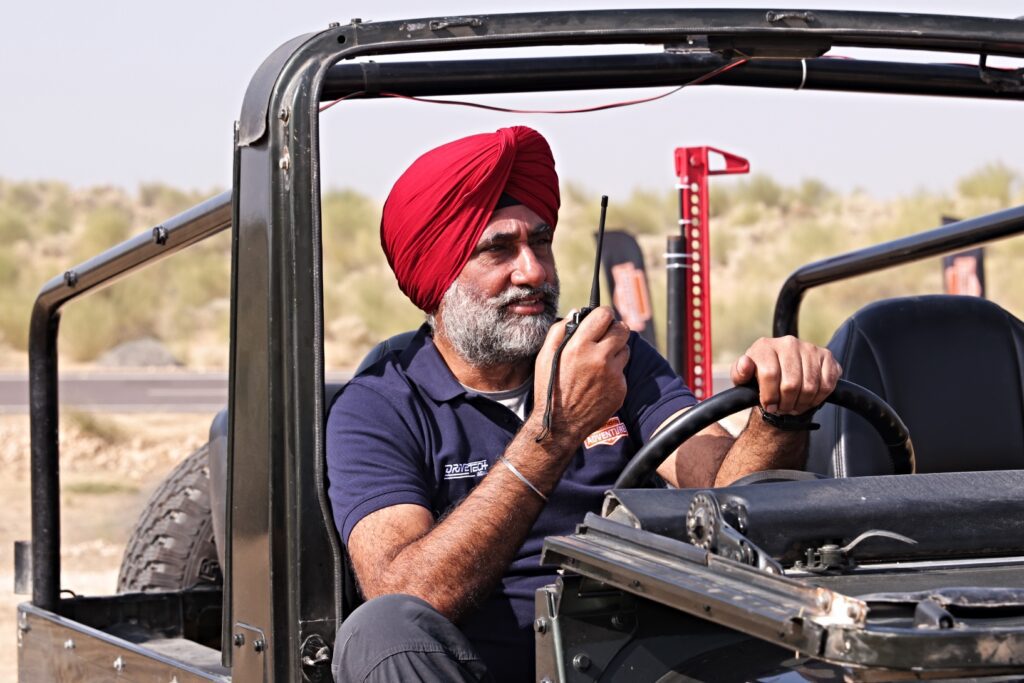
Moments later, Singh stood before us, walkie-talkie in hand, issuing instructions with clarity and authority. He outlined the essential dos and don’ts of desert driving, his tone measured yet firm, ensuring that even novices among us grasped the nuances of navigating the treacherous sand.
With that, we were dispatched in our SUVs to take on the undulating dunes.
What followed was nothing short of exhilarating. Khimsar offered a driving experience unlike any other – raw, demanding, and immensely rewarding. There was an almost primal thrill in ascending and descending those majestic dunes, feeling the vehicle respond to every subtle input, guided in no small part by Hari Singh’s meticulous briefing.
Yet, as with all good things, my time behind the wheel ended far too soon. Resigned to the sidelines, I retreated to one of the tents, a tall glass of chilled kiwi juice in hand, observing the proceedings from a distance. It was then that the true measure of Hari Singh revealed itself.
Not every journalist managed to tame the dunes. One by one, SUVs began to falter, some stalled mid-ascent, others bogged down helplessly in the soft sand, unable to move forward or retreat.
And that was when Hari Singh sprang into action. In his rescue vehicle, he would arrive swiftly, assess the situation, and with clinical precision, proceed to extract each stranded SUV with remarkable efficiency. There was no fuss, no wasted moments, just a seamless execution of skill and experience. One vehicle, then another, and another still, each recovered with the same effortless finesse. To watch him at work was, quite simply, awe-inspiring.
Having experienced deserts across Saudi Arabia, the UAE, and the United States, I thought I understood the challenges they posed. Yet, what unfolded before me that day in Khimsar, under the relentless Rajasthan sun, was something else entirely. It was mastery in its purest form.
The Khimsar trip concluded on a note of warmth and camaraderie, with a lavish dinner arranged around a crackling bonfire on a bitterly cold desert night. And yet, long after the evening faded and the journey ended, certain memories endured. The thrill of driving across those Khimsar dunes for the very first time. The confidence instilled by Hari Singh’s precise guidance, and above all, the image of a towering figure, commanding, composed, and quietly extraordinary, moving through the desert with an ease that seemed almost otherworldly.
This encounter with Hari Singh may have been brief, but it lingered.
If Khimsar had introduced me to Hari Singh’s quiet brilliance, Mandawa, would go on to reveal its full measure.
A couple of years after that first encounter, I found myself once again summoned to the desert, this time to Mandawa, nestled in the Jhunjhunu district of Rajasthan’s storied Shekhawati region, approximately 200 kilometres from Jaipur. The invitation promised another off-roading experience, but what unfolded there proved to be far more immersive, almost cinematic in its sweep and setting.
We were housed in luxurious tents pitched amidst the dunes themselves, a setting that felt both remote and indulgent in equal measure. Dawn arrived in hues of molten gold, dusk melted into amber horizons, and the nights, those vast, unbroken desert nights, were illuminated by a canopy of stars so brilliant that they seemed almost within reach. Around crackling campfires, we feasted on local delicacies and expertly prepared barbecued fare, the desert air carrying both warmth and excitement.
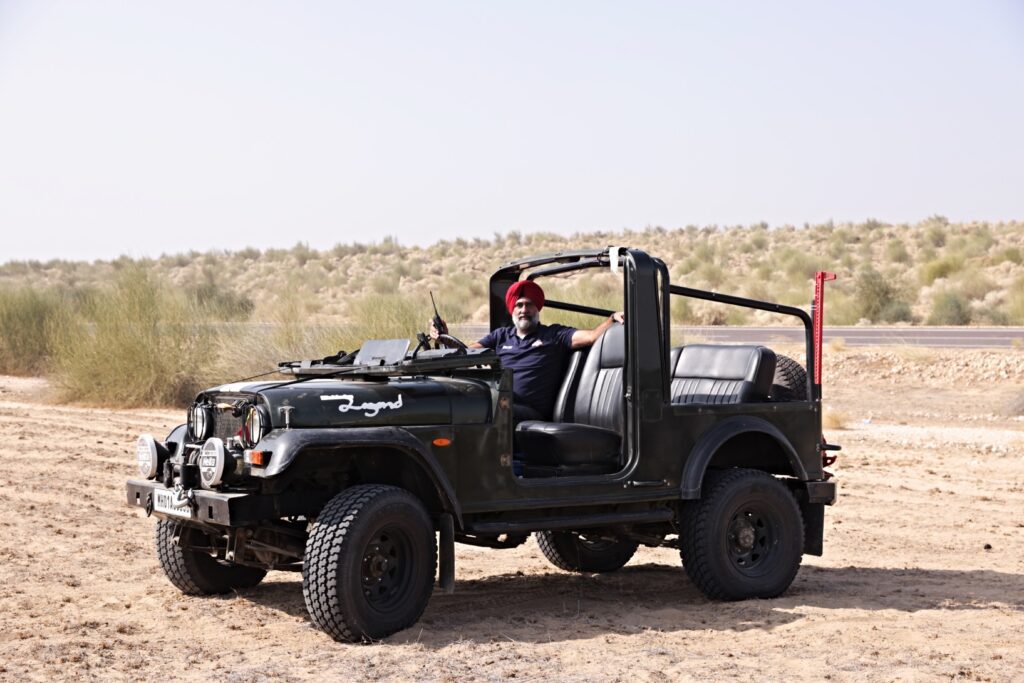
As if echoing the rhythms of Khimsar, Hari Singh arrived early, once again, at the helm of his formidable rescue vehicle, his teammates stationed at the rear, ready for whatever the day might demand. This time, however, he drove almost right up to our tents, a subtle yet striking reminder of both his confidence and command over the terrain.
After a succinct yet thorough briefing, we set off, an eager convoy of journalists, into the undulating expanse of Mandawa’s dunes.
What distinguished Mandawa from Khimsar was not merely its beauty, but its seclusion. This was no curated touristy experience. Singh and his team had painstakingly reconnoitred the terrain beforehand, selecting a location that felt untouched, unclaimed, where the dunes stretched endlessly, and where, for a fleeting moment, it seemed as though the desert belonged solely to us. Driving there felt almost surreal.
Yet, as is the nature of the desert, it does not yield easily. Before long, the first signs of trouble emerged. One SUV faltered, then another. Engines strained, wheels spun helplessly, and soon enough, a familiar pattern began to unfold, vehicles stranded at awkward angles, their progress arrested by the very sands they sought to conquer.
Once again, Hari Singh stepped forward. With an unerring sense of purpose, he and his team set about the task of recovery. But this time, the challenges were markedly different. Some vehicles had been driven hard, perhaps too hard, pushed beyond their limits by overenthusiastic hands. The consequences were evident: damaged undercarriages, overheated transmissions, and even compromised steering systems. This was no routine extraction exercise. And yet, Singh and his team worked with relentless focus.
Under the unyielding desert sun, they toiled without pause, assessing, improvising, repairing, and towing with a discipline that bordered on the extraordinary. Each vehicle presented its own set of complications, each recovery demanded a tailored approach, and through it all, Singh remained composed, methodical, and unwavering.
By the time the final vehicle had been secured and brought to safety, what had unfolded was nothing short of a masterclass, not merely in driving, but in problem-solving under pressure.
From close quarters, I witnessed what real desert driving entailed: not just skill behind the wheel, but resilience, technical acumen, and an unspoken understanding of the terrain’s unforgiving nature.
That evening, as the desert softened under twilight and the day’s exertions gave way to quiet celebration, I found myself in conversation with Singh over cocktails. I reminded him of our brief meeting at Khimsar years earlier.
To my mild surprise, and quiet delight, he remembered.
The evening unfolded atop a sand dune, where yet another impeccably curated dinner awaited us. The atmosphere was one of ease and camaraderie, but for me, it was also a moment of reflection.
Having witnessed Hari Singh once again in action, navigating chaos with calm authority, extracting every stranded vehicle with precision, my respect for him had deepened immeasurably. His driving was exceptional, yes, but it was his composure, his technical instinct, and his leadership in moments of crisis that truly set him apart.
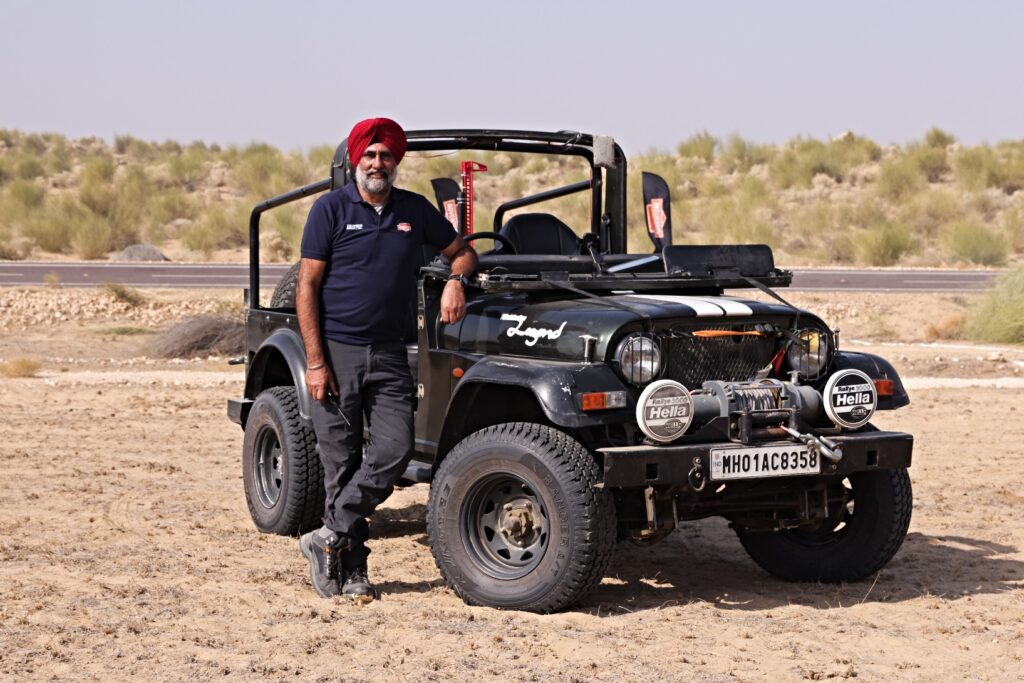
In the years that followed, I would often come across accounts of Singh leading expeditions across various parts of India, each one a testament to his enduring prowess and reputation. More than once, I found myself wondering what it might be like to be part of his team, to operate within that rarefied circle where skill, discipline, and adventure converged so seamlessly. And yet, almost as quickly as the thought would arise, reality would intervene. The idea of leaving Mumbai, of stepping away from the life I knew, was enough to dispel such fleeting ambitions.
Earlier this year, I travelled to Jaisalmer at the invitation of Mahindra, for the launch of the XUV 7XO. The event itself was significant, but what lay ahead the following day promised something far more exhilarating, a full day of driving across the fabled sand dunes of Sam, located roughly 50 kilometres from Jaisalmer. And leading this desert expedition was none other than Hari Singh!
It had been years since our last meeting, and I knew, almost instinctively, that this would be the moment to revisit an idea that had been quietly taking shape in my mind, a comprehensive cover story on the man himself.
The next morning began early, as all desert drives do. By the time we reached Sam, the stage had already been meticulously set. A series of off-roading activities awaited journalists and influencers alike, each designed to showcase the formidable capabilities of the newly launched XUV 7XO. Once we had completed the structured driving exercises across specially curated off-road tracks, anticipation began to mount. For me, however, the true highlight was yet to come. Dune bashing!
It had been far too long since I had last driven across Rajasthan’s golden dunes, and the prospect of returning to that elemental terrain, this time under Hari Singh’s watchful eye was irresistible.
Assured by the knowledge that Hari Singh was overseeing the entire operation, I allowed myself a rare indulgence, I threw all caution to wind and resolved to immerse myself fully in the experience.
My cameraman and I set off with great enthusiasm. The initial stretches were negotiated with ease, and our confidence was buoyed further when one of Singh’s teammates commended us with an approving “very good, very good.” One obstacle followed another, steep drops, fluid descents, shifting ridgelines, and we handled them all with precision and growing assurance. And then, quite suddenly, things changed.
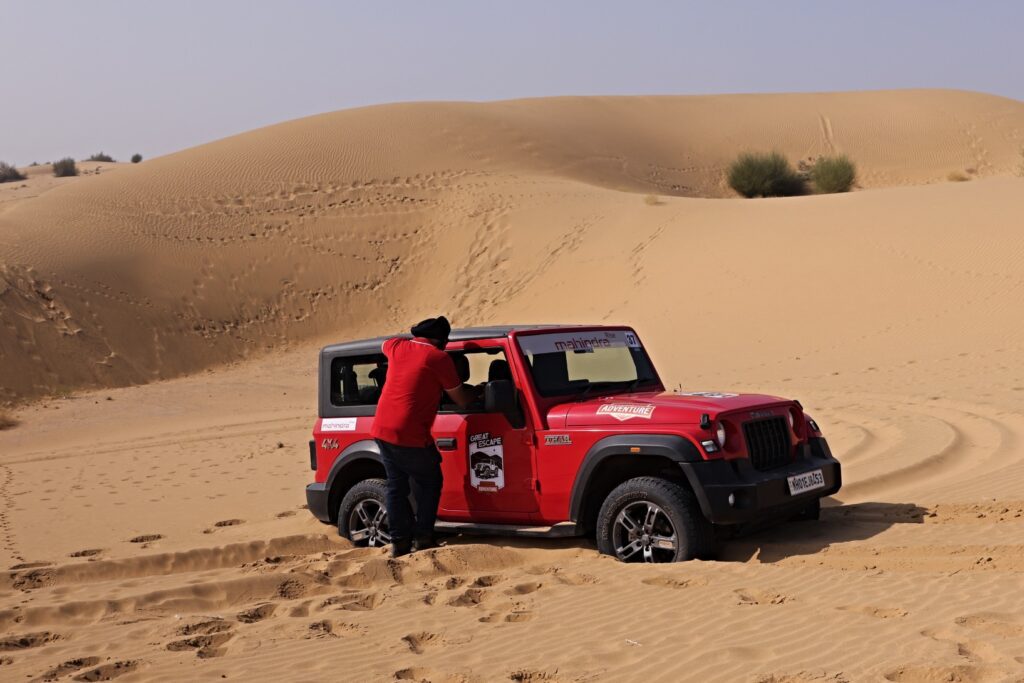
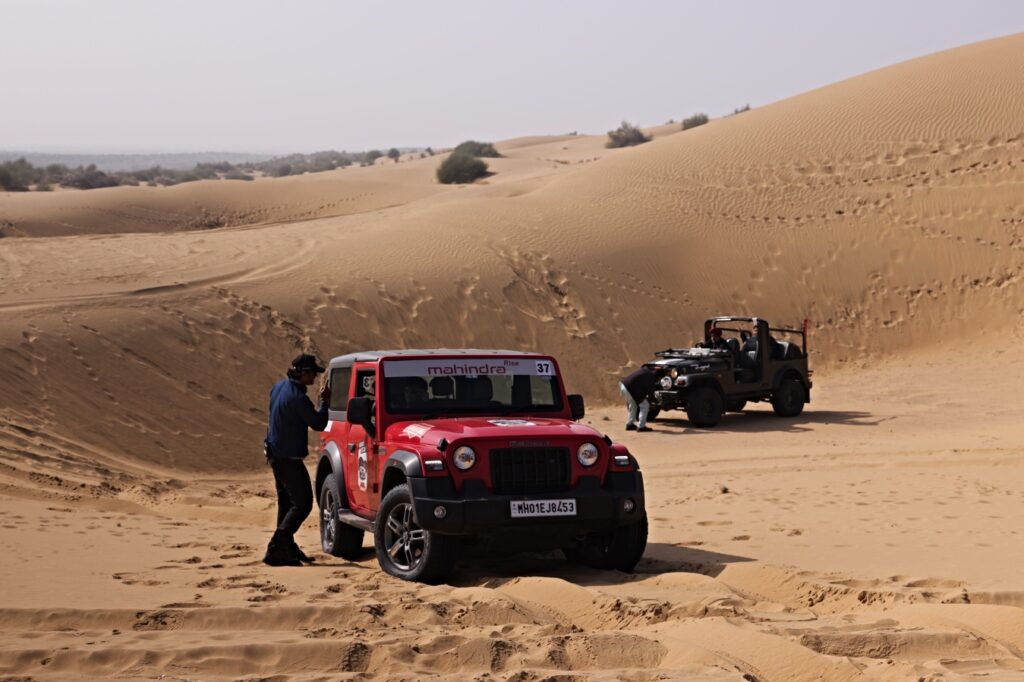
Somewhere between filming, driving, and sharing a few light-hearted moments, I veered ever so slightly off track. What seemed like a minor deviation quickly spiralled into something far more consequential. Despite repeated attempts to correct the line, the vehicle refused to respond as expected, and within moments, my Thar was firmly bogged down. Every attempt to move forward only worsened the situation, the tyres digging deeper into the soft sand. Reversing proved equally futile. The vehicle seemed to surrender entirely to the desert’s grip.
Perplexed, I switched off the engine and stepped out, only to be met with a startling sight. The sand had risen alarmingly close to the door. For someone accustomed to navigating Mumbai’s monsoon-flooded streets, this was an altogether different adversary – silent, shifting, and unforgiving.
Fortunately, this unfolding drama had not gone unnoticed. A member of Hari Singh’s team, stationed nearby, approached with calm assurance. After a brief exchange over his walkie-talkie, he smiled and asked me to relax. But me being me, despite everything, I was cool as a cucumber. The moment I heard that Hari Singh had been informed, I knew help was on its way.
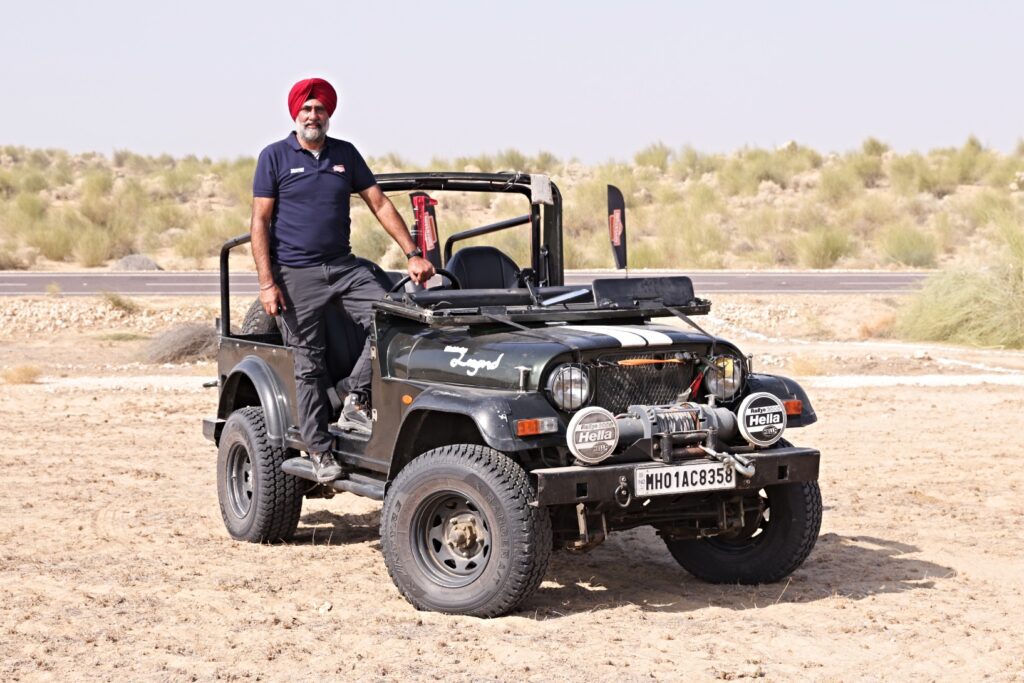
And sure enough, within minutes, I saw Hari Singh, clad in a black jacket and a red turban, trundling down a dune towards us in an open-top Mahindra Legend, a teammate at the rear, surrounded by an array of recovery equipment. The vehicle itself was a purpose-built rescue machine, equipped with an electric winch, a heavy-duty cable, and a hi-lift jack, among other tools essential for desert recovery. It was a sight I had witnessed before. And yet, it felt no less reassuring.
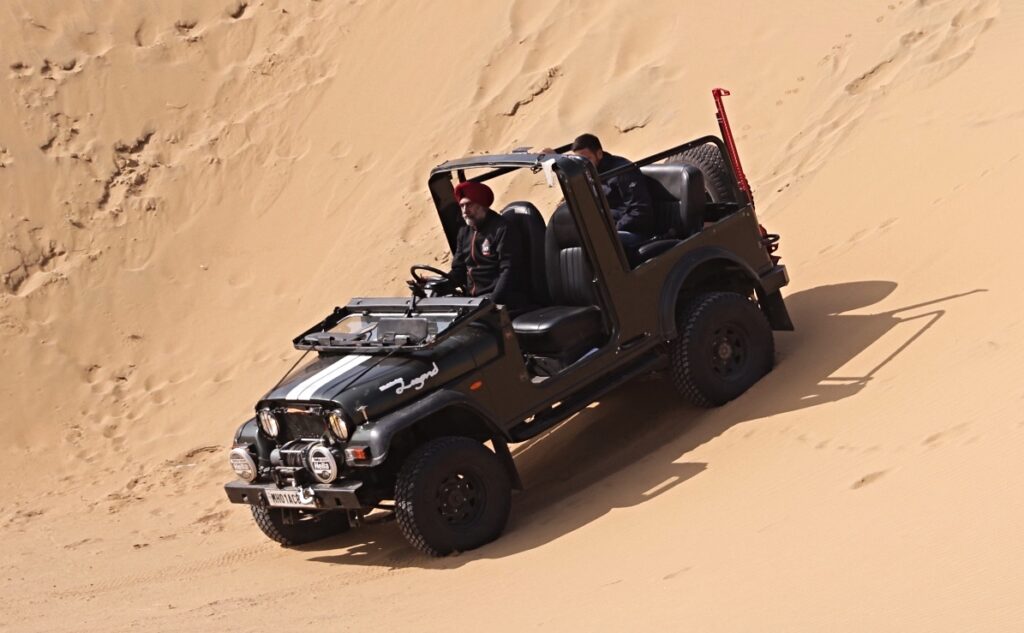
What followed was executed with the kind of precision that only years of experience can yield. This time around though Hari Singh remained saeated in the Legend while his teammate secured the necessary straps and D-shackles, fastening my stranded Thar to the winch cable. Instructions were relayed clearly and calmly, every step deliberate, every movement controlled. And then, almost effortlessly, Hari Singh brought the winch to life. With measured restraint and impeccable control, he guided the recovery process, easing the vehicle out of the sand’s grasp. No theatrics, no urgency, merely quiet competence. Within minutes, the ordeal was over! What had felt like an inescapable predicament was resolved with remarkable ease, thanks to Hari Singh and his teammates.
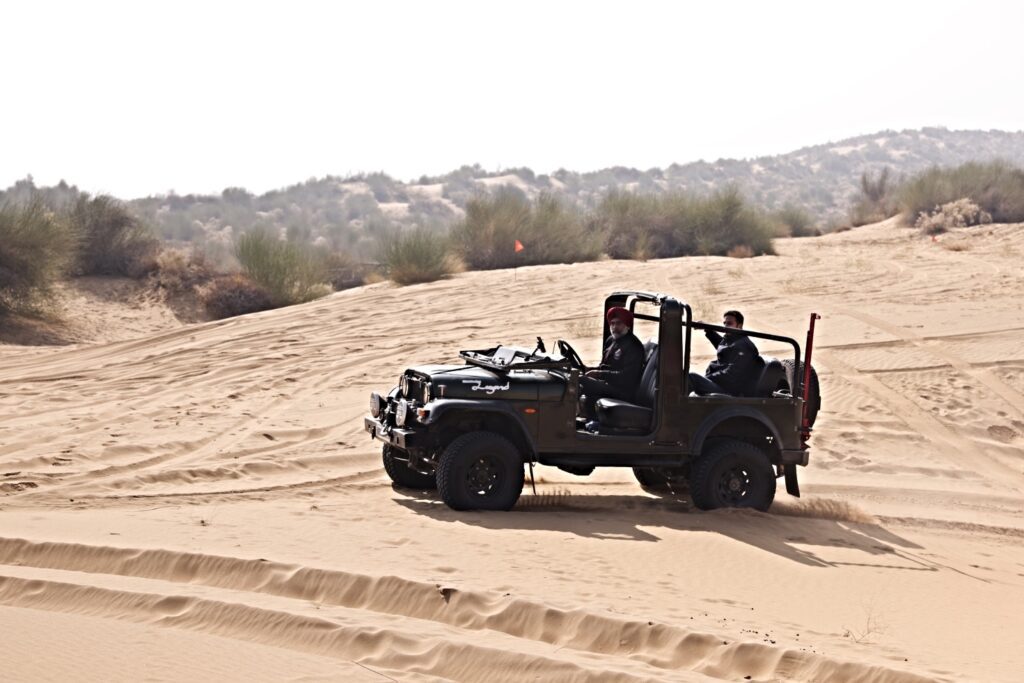
Once freed, I was told to follow a freshly created track that Hari Singh would prepare, a safer, more navigable route leading to the next obstacle. “Aye aye, sir,” I responded instinctively, acknowledging both the instruction and the authority behind it.
With that, I resumed the drive, this time with renewed respect for the terrain and for the man orchestrating it all.
The remainder of the day unfolded without incident, filled with the kind of spirited driving experiences that Mahindra had so meticulously arranged.
A few hours later, as the desert sun reached its zenith, we gathered for lunch in a cool, white tent set amidst the dunes. It was here that I approached Hari Singh. I thanked him for coming to our rescue and apologised for the inconvenience we had caused. True to form, he dismissed it with characteristic grace. “Not at all,” he said. “That’s why I am here. We want you to get stuck and truly experience the desert, otherwise, what would be the point of me being here if I couldn’t help you out?”
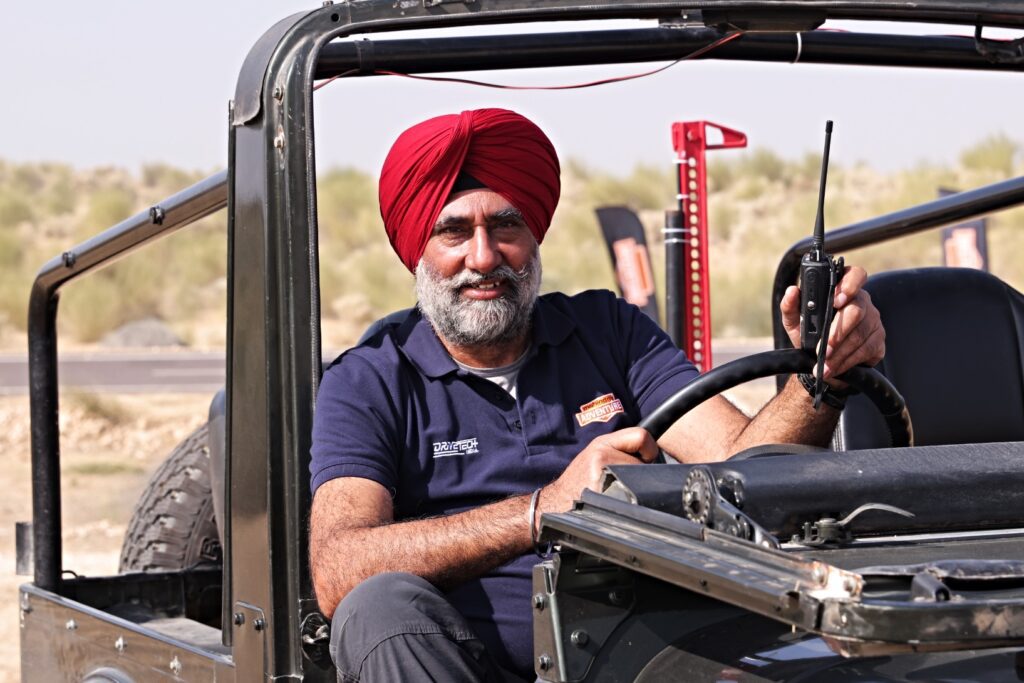
We spoke briefly. I reminded him of our previous encounters in Khimsar and Mandawa, both of which he recalled with ease. I asked after his daughter, and he shared, with evident pride, that she was now flying with an international airline.
It was during this exchange that I finally broached the subject of the long-contemplated cover story. He was receptive. Encouraging, even.
But it seemed like fate had other plans.
Today, it is heartbreaking to write about Hari Singh, the spirited, soft-spoken gentleman, in the past tense. Was it not just two months ago that he had come to my rescue in the Sam dunes?
For the past six days, I have followed every single news update with unwavering attention, ever since the tragic speedboat accident in the Maldives, in which he along with Commander Mahesh Ramchandran, a retired Indian Naval Officer, were reported missing.
Yet even now, I hold on to hope. A hope for a miracle. A hope that both these distinguished and valiant men return home safely.
Hari Singh spent a lifetime rescuing motorheads from impossible situations and unforgiving terrains. It feels terribly unfair that, on the night he needed rescuing the most, there was nobody to help him.
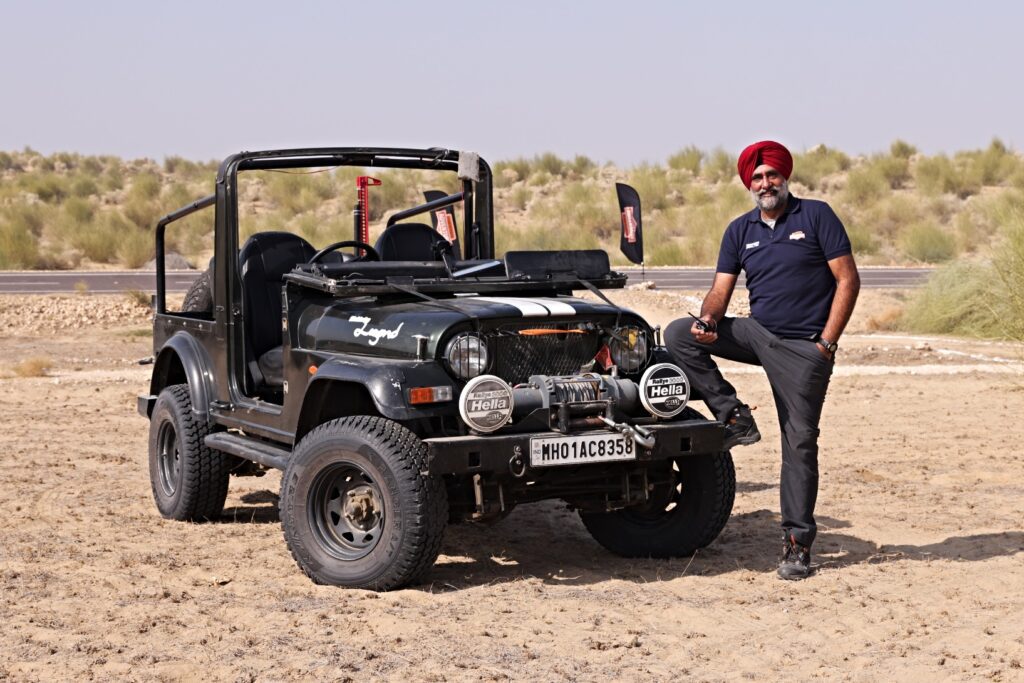
And yet, perhaps that is not how his story should end. For those who witnessed his mastery, his composure, and his quiet strength, Hari Singh, will always remain what he was in those vast, unyielding deserts – A man who arrived when it mattered most.
Latest
-
 Hyundai Lounge Edition debuts with premium rear-seat experience on three SUVs
 -
 Gestamp opens fifth India production facility in Gujarat with INR 523.7 Crore investment
 -
 Kinetic DX+ launched with 3.1 kWh LFP battery and 132 km IDC range
 -
 UST completes majority stake acquisition in Italdesign from Audi Group
 -
 BMW i5 LWB arrives in India with 81.6kWh battery and 669km range
-
 Mahindra XUV 7XO redefines what a family SUV can be
 -

 2026 Tata Tiago iCNG: When smart engineering elevates your daily driver
 -
 Why the New-Gen Tata Tiago Petrol feels like a true driver’s car
 -
 Tata Harrier Petrol Review: A Sophisticated New Chapter
 -
 Can a 1.5-Litre Petrol engine do justice to the Tata Safari?

Leave a Reply
You must be logged in to post a comment.