

How Tata Sierra.ev is defining the premium mid-size electric SUV space
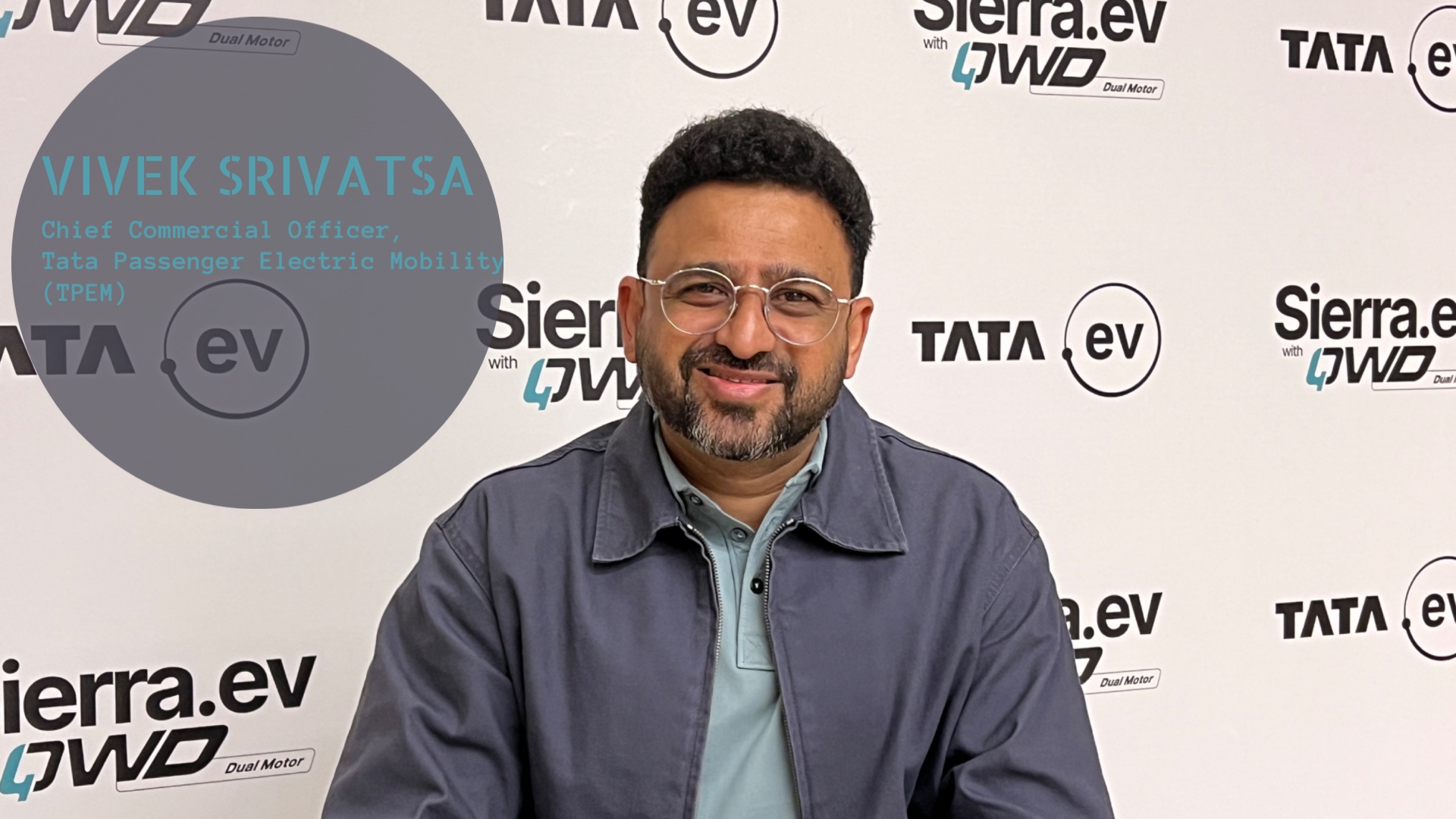
In this conversation with Vivek Srivatsa, Chief Commercial Officer, Tata Passenger Electric Mobility, he tells us not only about the Sierra.ev’s technology and features, but also about who it is built for. Besides, he also gives us the full lowdown on the India’s electrification scene as well as the company’s sales and after-sales strategy.
30/06/2026
No Comments
MUMBAI
“The Tata Sierra.ev is an enticing buy for all those who’re looking at buying a midsized electric SUV, and with EV adoption gathering pace in India, as well as rising customer demand, the timing for the launch of the Sierra.ev seems just right,” says Vivek Srivatsa, Chief Commercial Officer, Tata Passenger Electric Mobility who fielded our questions with aplomb.
TOS: What has the response to the Sierra been like, and what are your expectations from the Sierra.ev?
VS: The response to the Sierra has been stupendous; both in terms of customer excitement and booking numbers. In fact, we haven’t been able to ramp up deliveries as much as we would have liked because we’re facing some component-level issues, which have affected our ability to deliver the preferred powertrain mix that customers want.
The Sierra will significantly add to our overall volumes because it allows us to utilize higher production capacity. We’re very excited because the Sierra is arriving at exactly the right time. The EV market is now moving toward the early majority, there’s a huge surge in EV demand, and the mid-size SUV segment is the largest category in the automotive market. The Sierra enters the market at a sweet spot, and we’re very positive about how customers will respond to it.
TOS: The Sierra.ev gets some really exciting features. Can you tell us what’s new?
VS: One of the biggest highlights is the QWD (Quad Wheel Drive) system with a dual-motor setup, which is a first in this segment. It delivers significantly more power and inspires greater confidence while driving.
Inside the cabin, we’ve introduced several customer-focused features. One of them is the AirConsole gaming platform, which enables multiplayer gaming inside the vehicle. Family members can play together while travelling, and when the car is stationary, all four occupants can participate in multiplayer games.
The Sierra.ev also comes with a 540-degree camera, including a transparent bonnet view that allows you to see the area directly beneath the vehicle, making off-road driving and tight manoeuvres much easier.
We’ve also partnered with Google to introduce what is likely a world-first feature—EV Route Planner. This allows customers to plan their entire journey directly on the vehicle’s display. Google Maps will recommend charging stations along the route, calculate how long you’ll need to charge, estimate charging costs, and even let you specify the battery State of Charge (SOC) you’d like to have when you reach your destination. It makes long-distance EV travel significantly more convenient.
On the entertainment side, the Sierra.ev features Dolby Atmos integration with Apple CarPlay, providing a more immersive in-car audio experience.
Additionally, we’ve built UPI payments directly into the vehicle. This allows customers to make payments, for example, at tolls, directly from the car without needing to take out their phone. Authentication is still required, but the process becomes much more seamless.
TOS: Do tell us about the battery packs that the Sierra.ev gets…
VS: The Sierra.ev will be offered with two battery pack options: the 65 kWh and the 75 kWh.
The 75 kWh version will also be available with an all-wheel-drive configuration, thanks to the dual-motor setup. The standard versions will be rear-wheel drive.
TOS: Tell us about the electrification scene across India right now…
VS: EV adoption in India is growing dramatically. Just in the last quarter, EV penetration has increased from around 4% to nearly 10%.
We started seeing demand pick up about a year ago as newer products entered the market with larger battery packs, faster charging capabilities, and more options for consumers. That created the initial wave of demand.
What really accelerated the momentum was the geopolitical uncertainty around fuel availability, along with rising fuel prices. As a result, EVs have become a very attractive alternative for many consumers.
At Tata, we’ve already put more than 300,000 EVs on the road, which has significantly increased customer confidence in EV technology. Charging infrastructure has also improved considerably. While people may not always see the physical infrastructure, the digitisation of EV charging means it’s now easily accessible through mobile apps, allowing seamless charging while travelling.
All these factors together are driving EV demand. From our side, inquiries have grown almost threefold. In fact, demand is currently far higher than what we’re able to produce.
TOS: Who is the potential customer for the Sierra.ev?
VS: We believe the Sierra.ev will appeal to customers looking at the current midsize SUV segment. Today, the midsize SUV is the sweet spot of the Indian market. It’s large enough to offer a sense of prestige and status, whether you’re attending a family function or a social event, but it’s also compact enough to remain easy to drive and live with.
The versatility of a midsize SUV makes it ideal for multiple use cases… daily commutes, transporting family and children, as well as occasional road trips and holidays. That’s why it is one of the fastest-growing and largest categories in India. Coupled with the growing demand for EVs, the timing is right for a premium midsize electric SUV like the Sierra.ev.
In terms of customer profile, we’re looking at a family of four, typically where either one person is employed or they run their own business. They have likely owned a four-wheeler for the last four or five years and are now looking to upgrade. Their household income would typically be over INR 100,000/- per month, and they are likely based in Tier 1 or Tier 2 cities.
As their family and income grows, they want a vehicle that reflects their progress and makes a statement. Fundamentally, our target customer is a midsize SUV buyer who is ready to make the transition to electric mobility.
TOS: When it comes to service, do you see more customers coming in with complaints about your ICE vehicles or your EVs?
VS: It’s actually about the same. I wouldn’t say that ICE vehicles generate more complaints than EVs, or vice versa.
With EVs, there’s naturally a learning curve because many customers are first-time EV owners. They need some time to adapt their driving style and understand the vehicle’s features. As a result, they tend to have more questions about how the vehicle works.
However, these are generally customer queries rather than complaints, and they are typically handled by our dealerships and service centres rather than coming directly to Tata Motors.
TOS: Do tell us about your service and after-sales strategy, and how you plan to enhance it?
VS: We’re working extensively on expanding our service network. We’re significantly increasing manpower, investing in training, improving spare parts availability, and strengthening logistics so that the entire demand and fulfilment cycle becomes much faster.
We’re also leveraging technology, including AI-based diagnostics and predictive maintenance tools, to identify potential issues early and resolve them quickly, reliably, and efficiently.
Improving service is a gradual process, and customers will see the improvements over time. As I said previously, our goal is to become one of the industry benchmarks for after-sales service, and you’ll begin to see substantial progress over the next year.
Latest
-
 Hyundai Lounge Edition debuts with premium rear-seat experience on three SUVs
 -
 Gestamp opens fifth India production facility in Gujarat with INR 523.7 Crore investment
 -
 Kinetic DX+ launched with 3.1 kWh LFP battery and 132 km IDC range
 -
 UST completes majority stake acquisition in Italdesign from Audi Group
 -
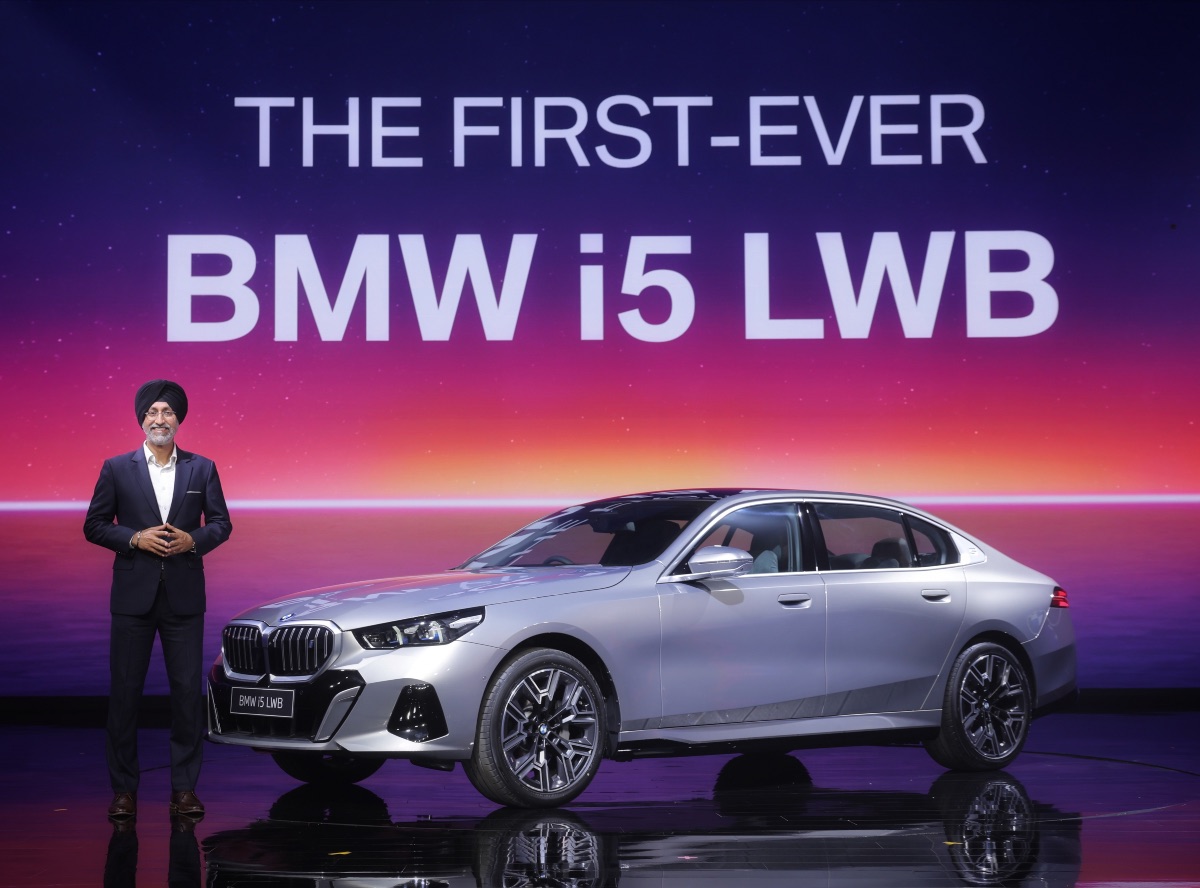 BMW i5 LWB arrives in India with 81.6kWh battery and 669km range
-
 Mahindra XUV 7XO redefines what a family SUV can be
 -

 2026 Tata Tiago iCNG: When smart engineering elevates your daily driver
 -
 Why the New-Gen Tata Tiago Petrol feels like a true driver’s car
 -
 Tata Harrier Petrol Review: A Sophisticated New Chapter
 -
 Can a 1.5-Litre Petrol engine do justice to the Tata Safari?

-
 Saurabh Vatsa on Nissan India’s resurgence, Tekton, Gravite, and the roadmap ahead
 -
 Ducati Monster enters its fifth generation with new V2 engine and lighter chassis
 -
 How the new Audi Q9 redefines the luxury SUV experience
 -
 Nissan Tekton sets the stage for the brand’s next growth phase
 -
 2026 Ducati Multistrada V4 Rally blends luxury touring with hardcore adventure