

India–Japan automotive collaboration strengthens with Maruti Suzuki India’s Kharkhoda plant launch
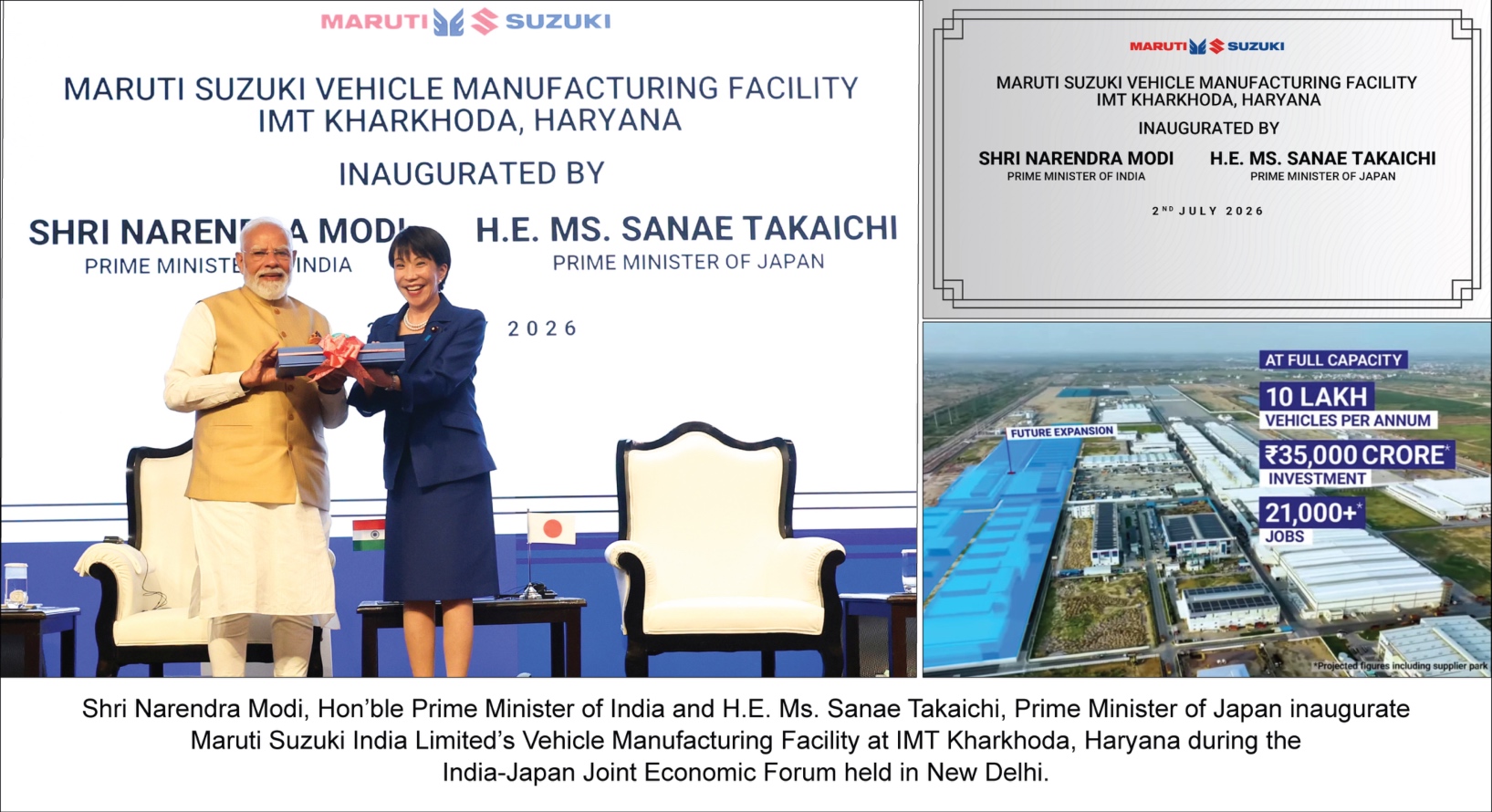
Maruti Suzuki India Limited has marked a defining chapter in its four-decade journey in India with the inauguration of its most advanced vehicle manufacturing facility at IMT Kharkhoda in Haryana. The ceremony, held during the India–Japan Joint Economic Forum in New Delhi through video conferencing, was jointly led by Hon’ble Prime Minister Shri Narendra Modi and the Prime Minister of Japan, H.E. Ms. Sanae Takaichi, underscoring the deepening strategic and industrial partnership between the two nations.
02/07/2026
No Comments
NEW DELHI/ KHARKHODA
Maruti Suzuki India Limited has formally inaugurated its most advanced automotive manufacturing facility at IMT Kharkhoda, Haryana, in a landmark moment for both the company and the broader India–Japan industrial corridor. The event, conducted via video conferencing during the India–Japan Joint Economic Forum in New Delhi, was graced by Hon’ble Prime Minister Shri Narendra Modi and the Prime Minister of Japan, H.E. Ms. Sanae Takaichi.
The inauguration also saw the presence of Mr. Toshihiro Suzuki, Representative Director & President, Suzuki Motor Corporation (SMC), and Mr. Hisashi Takeuchi, Managing Director & CEO, Maruti Suzuki India Limited (MSIL), alongside senior dignitaries from the Government of India, reflecting the significance of the occasion at both corporate and national levels.
At full capacity of one million units per annum, the Kharkhoda facility is poised to rank among the largest vehicle manufacturing plants globally. It will play a pivotal role in Maruti Suzuki’s ambitious target of achieving a four million unit annual production capacity. The total projected investment in the facility stands at INR 35,000 crore, with the creation of over 21,000 employment opportunities.
Speaking on the occasion, Mr. Toshihiro Suzuki, Representative Director & President, Suzuki Motor Corporation, said: “It is a great honour for Suzuki group today as its most advanced car manufacturing facility at Kharkhoda, Haryana has been inaugurated by Hon’ble PM Narendra Modi and H.E. Sanae Takaichi. From current capacity of half a million units, the plant will be further scaled to one million units, making it one of the largest car plants in the world. It is a testament to the success of India-Japan partnership and ‘Make in India’ initiative. With favourable policy environment under Hon’ble PM Modi’s leadership, Suzuki is accelerating investments, employment, exports and technologies towards Viksit Bharat journey.”
He further emphasised India’s growing strategic importance within the Suzuki Group, noting that the country has evolved into a central pillar of its global manufacturing and export ecosystem. He highlighted that Suzuki’s first Battery Electric Vehicle, the e VITARA, is being manufactured exclusively at Maruti Suzuki’s Gujarat plant for export to 100 countries. He also pointed out that, through Made in India exports, Suzuki has become the largest car importer in Japan, reinforcing the global confidence in India’s manufacturing capabilities and the realisation of the “Make in India, Make for the World” vision.
The Kharkhoda manufacturing facility has been conceptualised as a ‘Suzuki Smart Factory’, integrating advanced digital technologies to enable real-time operational visibility. This approach enhances safety, quality, and productivity while significantly reducing energy consumption across manufacturing processes.
In a forward-looking leap towards Industry 5.0, the plant incorporates human-aware collaborative robots (COBOTS), designed to work seamlessly alongside human operators. This synergy between human intelligence and machine precision is intended to establish global benchmarks in manufacturing excellence.
Sustainability forms a cornerstone of the Kharkhoda facility’s design and operations. The plant’s entire electricity requirement is met through renewable energy, comprising solar power and green power procurement. With an installed solar capacity of 20 MWp, there are plans to scale this up to 70 MWp by 2030.
Complementing this renewable energy framework are additional green infrastructure initiatives, including a 10 TPD biogas plant and a 1 MWh Battery Energy Storage System, reinforcing the company’s long-term decarbonisation strategy.
In alignment with responsible industrial practices, the facility operates on a zero liquid discharge model, ensuring complete recycling of water. Nearly two-thirds of the plant’s total water requirement is fulfilled through recycled water and rainwater harvesting systems, significantly reducing freshwater dependency.
To further optimise logistics efficiency and reduce fuel consumption, an in-plant railway siding will be developed at Kharkhoda. This initiative mirrors similar infrastructure already operational at Maruti Suzuki’s Manesar (Haryana) and Hansalpur (Gujarat) facilities, enabling smoother and more sustainable vehicle dispatch operations.
Beyond manufacturing, Maruti Suzuki continues to deepen its social commitment through targeted CSR initiatives across 10 villages surrounding the Kharkhoda facility. These programmes focus on education, healthcare, sanitation, and community infrastructure, developed in close consultation with local stakeholders.
In a parallel effort to strengthen India’s automotive talent pipeline, Maruti Suzuki has established four Japan-India Institutes for Manufacturing (JIMs), a collaborative initiative between the Governments of India and Japan. Since inception, these institutes have trained 2,600 students, creating a structured pool of industry-ready skilled professionals.
Looking ahead, the company plans to enhance residential training infrastructure by developing student hostel facilities at JIM Sonipat and Manesar, further supporting long-term skill development in the manufacturing sector.
Maruti Suzuki Manufacturing Footprint
| Plants & Capacity break up | Gurugram – 0.5 million unitsManesar – 0.9 million unitsHansalpur – 0.75 million unitsKharkhoda – 0.5 million units |
| Expected capacity by FY 2026-27 | 2.9 million units after the commissioning of fourth production plant at Hansalpur. |
Latest
-
 Mahindra XUV 7XO redefines what a family SUV can be
 -

 2026 Tata Tiago iCNG: When smart engineering elevates your daily driver
 -
 Why the New-Gen Tata Tiago Petrol feels like a true driver’s car
 -
 Tata Harrier Petrol Review: A Sophisticated New Chapter
 -
 Can a 1.5-Litre Petrol engine do justice to the Tata Safari?





-
 Saurabh Vatsa on Nissan India’s resurgence, Tekton, Gravite, and the roadmap ahead
 -
 Ducati Monster enters its fifth generation with new V2 engine and lighter chassis
 -
 How the new Audi Q9 redefines the luxury SUV experience
 -
 Nissan Tekton sets the stage for the brand’s next growth phase
 -
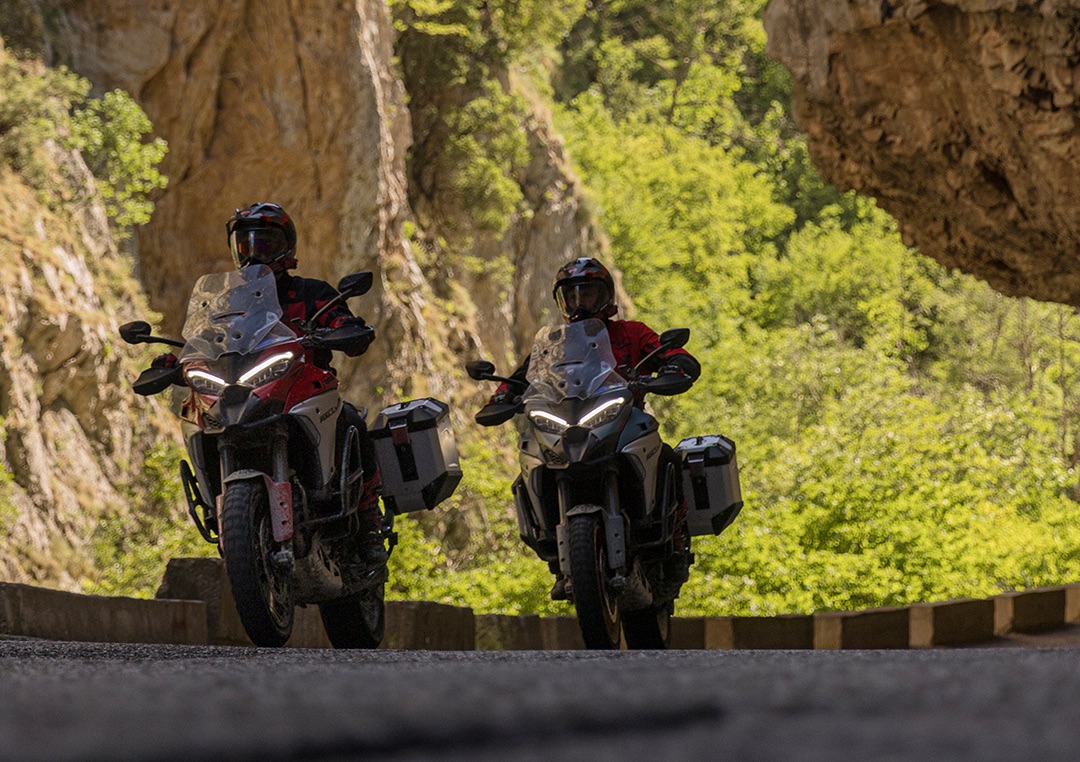 2026 Ducati Multistrada V4 Rally blends luxury touring with hardcore adventure
Leave a Reply
You must be logged in to post a comment.