

BIS certification for Ola Electric’s indigenous 46100 LFP cell marks significant leap for India’s battery manufacturing ambitions
Ola Electric has achieved a significant breakthrough in India’s battery manufacturing journey. Through its wholly owned subsidiary, Ola Cell Technologies, the company has secured Bureau of Indian Standards certification for its indigenously developed 46100-format LFP cylindrical cell, becoming the first Indian company to achieve this distinction and further strengthening the country’s ambitions for energy independence and advanced cell manufacturing.
23/06/2026
No Comments
BENGALURU
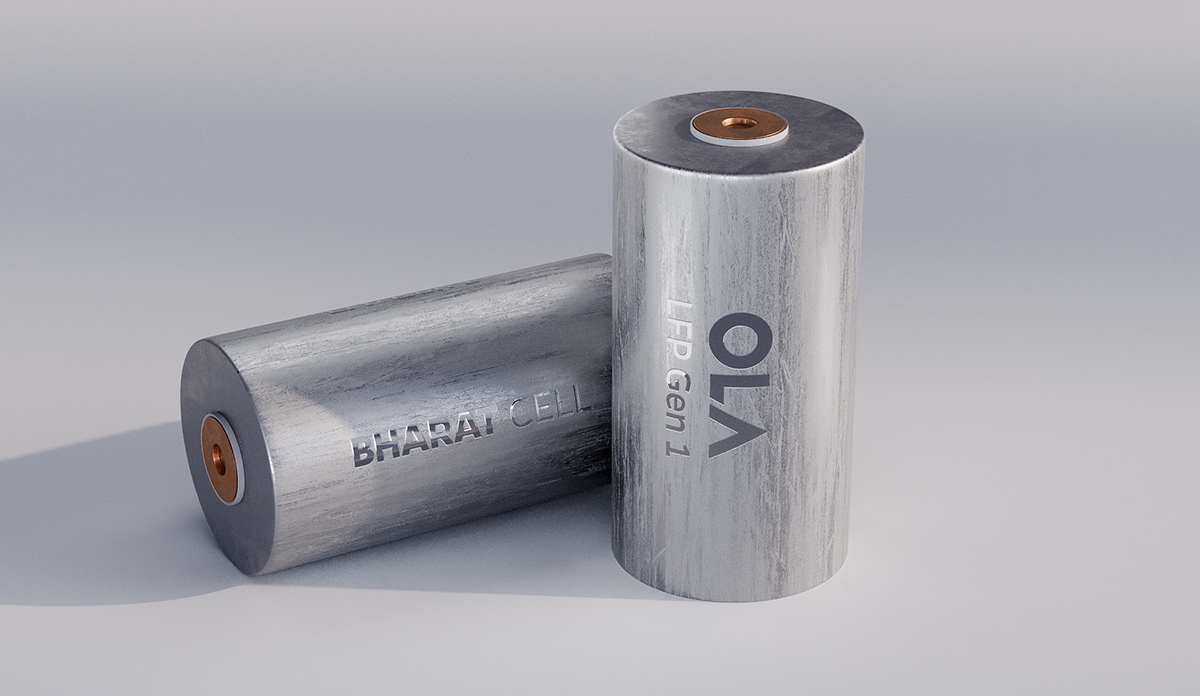
Ola Cell Technologies (OCT), a wholly owned subsidiary of Ola Electric, has announced that it has received Bureau of Indian Standards (BIS) certification under IS 16046 (Part 2):2018 / IEC 62133-2:2017 for its indigenously developed LFP 46100 cylindrical cell. With this achievement, Ola Electric has become the first Indian company to secure BIS certification for an indigenously developed cell in the 46100 format, marking a notable milestone in India’s ongoing pursuit of advanced battery manufacturing capabilities and greater energy independence.
Further reinforcing the significance of the development, the LFP 46100 cell has also successfully qualified under IS 16893 Parts 2 and 3, as well as UN 38.3 standards. These certifications confirm that the cell has completed the prescribed electrical, mechanical, environmental, reliability, abuse and transportation-safety evaluations. Developed with substantial localisation across materials, components, engineering and manufacturing processes, the LFP 46100 highlights Ola Electric’s growing capability to develop, qualify and industrialise advanced battery-cell technologies within India.
The BIS certification follows an extensive series of safety, performance and endurance assessments conducted at a National Accreditation Board for Testing and Calibration Laboratories (NABL)-accredited facility. As part of the qualification process, the 46100 LFP cell underwent a comprehensive range of evaluations, including thermal abuse, external short circuit, forced discharge, impact, altitude, abnormal charging, vibration, continuous low-rate charging, crush, free fall and mechanical shock testing.
Speaking on the occasion, an Ola Electric spokesperson said, “The BIS certification of our indigenously developed 46100 LFP Cell is a significant milestone in our mission to build India’s most advanced EV and energy ecosystem. The successful certification and qualification of this cell reflects the strength of our R&D, engineering, and manufacturing capabilities, while reinforcing our commitment to developing world-class battery technologies in India. As we continue to expand our in-house cell portfolio, we are creating the technological foundation required to accelerate EV adoption, support future energy storage solutions, and strengthen India’s energy independence.”
The newly certified LFP 46100 platform expands Ola Electric’s in-house cell portfolio beyond its NMC 4680 Bharat Cell and establishes a qualified technology foundation for future electric mobility and stationary energy-storage applications. Delivering an energy density of over 170 Wh/kg, broad operating-temperature capability and a development pathway towards more than 4,000 charge-discharge cycles, the cell has been engineered to address applications where safety, lifecycle and cost considerations are as critical as energy and power performance.
Ola Electric has simultaneously continued to strengthen its indigenous battery technology ecosystem. Thousands of vehicles powered by its 4680 Bharat Cells are already operating on Indian roads, collectively covering millions of kilometres in real-world conditions. This growing body of on-road validation reinforces the reliability and performance of the company’s battery technology while demonstrating its ability to scale advanced cell manufacturing capabilities within the country.
At the heart of the company’s long-term battery strategy lies its Gigafactory, which continues to play a pivotal role in advancing domestic cell production. By developing both NMC and LFP technologies on a common 46-series architecture, Ola Electric is strategically positioned to deploy the most suitable chemistry across mobility and energy-storage applications. This approach is expected to enhance domestic value addition, reduce dependence on imported cell technologies and further support India’s transition towards a more self-reliant and sustainable energy future.
Latest
-
 Mahindra XUV 7XO redefines what a family SUV can be
 -

 2026 Tata Tiago iCNG: When smart engineering elevates your daily driver
 -
 Why the New-Gen Tata Tiago Petrol feels like a true driver’s car
 -
 Tata Harrier Petrol Review: A Sophisticated New Chapter
 -
 Can a 1.5-Litre Petrol engine do justice to the Tata Safari?





-
 Saurabh Vatsa on Nissan India’s resurgence, Tekton, Gravite, and the roadmap ahead
 -
 Ducati Monster enters its fifth generation with new V2 engine and lighter chassis
 -
 How the new Audi Q9 redefines the luxury SUV experience
 -
 Nissan Tekton sets the stage for the brand’s next growth phase
 -
 2026 Ducati Multistrada V4 Rally blends luxury touring with hardcore adventure
Leave a Reply
You must be logged in to post a comment.